Categories
international relations Japan-related research

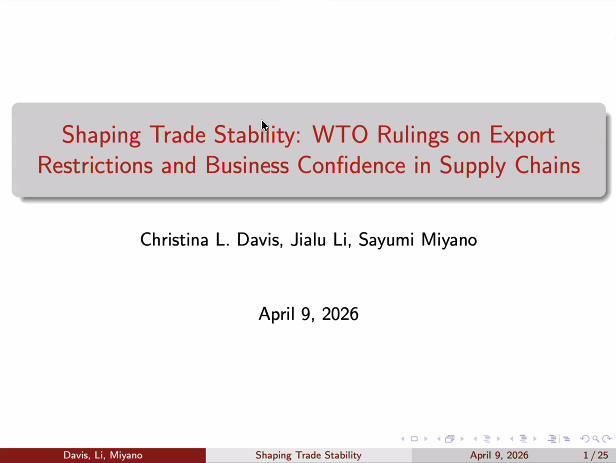
JPOSS #59: “Shaping Trade Stability: WTO Rulings on Export Restrictions and Business Confidence in Supply Chains”

The fifty-ninth session of the Japanese Politics Online Seminar Series (JPOSS) took place on April 9, 2026. Saori Katada (University of Southern California) chaired the seminar and moderated the Q&A session.

Christina Davis (Harvard University) presented a paper, co-authored with Jialu Li (Independent Researcher) and Sayumi Miyano (Osaka University), examining the effects of WTO rulings and state compliance on business managers. As the rules-based trade order has come under strain in recent years, the authors present original survey experimental evidence on the utility of multilateral frameworks in response to rules violations. Leverage the context of Japanese firms that are heavily exposed to China’s trade behavior, the authors executed a between-subjects survey experiment featuring four vignettes: WTO’s ruling on China’s rules violation, the ruling and China’s compliance, China’s unilateral action, and a neutral statement on WTO principles. The survey was fielded to a sample of 2,100 business managers with decision-making power in medium- to large-sized Japanese firms. The findings show that business managers reported stronger confidence in China’s supply chain reliability when informed about China’s compliance as opposed to only its violations. Respondents in the compliance treatment group also reported stronger confidence than those in the group that learned about China’s unilateral decision regarding the same behavior. At the same time, the results also reveal limitations 0f the multilateral framework. First, the authors found no evidence of spillover effects on confidence in the supply chain reliability of other states, specifically US and Indonesia, though these baseline measures were considerably higher across all vignette groups. Second, the effect varied across industries, which suggests that managers in some industries had opinions that were harder to shift.

Iain Osgood (University of Michigan) and Gregory Shaffer (Georgetown University Law Center) offered comments on the theoretical outcome of interest, the varying nature of the information signals across vignettes, and the framing of the paper. During the Q&A, participants furthered discussion on the goals of China’s actions and possible strategic considerations, the effects related to alternative forms of violations, and suggestions for future studies.

The organizers would like to thank the presenters, discussants, and participants, as well as the staff at the Harvard Program on U.S.-Japan Relations, who provided administrative support. We look forward to seeing you at the next session of JPOSS:  https://jposs.org/.

Categories
comparative politics international relations Japan-related research

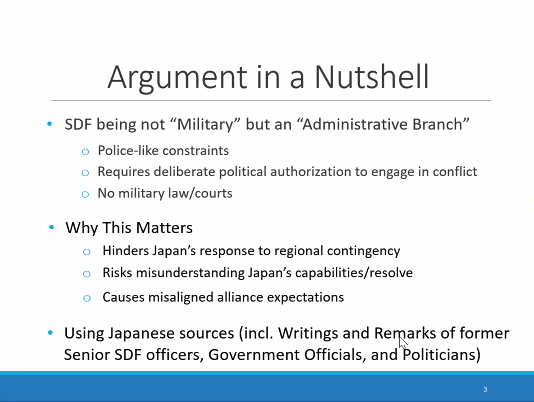
JPOSS #58: “The Military That Isn’t: Legalized Anti-Militarism and Limits of Japan’s Defense Policy”

The fifty-eighth session of the Japanese Politics Online Seminar Series (JPOSS) took place on March 5, 2026. Amy Catalinac (New York University) chaired the seminar and moderated the Q&A session.

Yuji Idomoto (University of California San Diego) presented a paper on the legal constraints faced by Japan’s Self-Defense Force (SDF). While recent scholarship has focused on Japan’s defense buildup, Idomoto highlights the legal dimension which creates notable differences between the SDF and other militaries. First, Japan’s SDF is one step removed from typical combat readiness during peacetime because it operates under a positive list of authorized actions in response to immediate threats. Transitioning to a negative list used by most other militaries requires explicit cabinet approval through a Defense Operations Order. Second, Idomoto highlights the incompatible incentives faced by SDF personnel in the absence of a military court or legal framework to adjudicate misconduct and clarify individual liability for actions taken during military operations.

Thomas Berger (Boston University) and Paul Midford (Meiji Gakuin University) offered insightful comments on whether the explanation is purely institutional, the role of SDF’s organizational culture, and broader implications of the argument, including on intelligence/state secrecy and the time required for cabinet approval if mobilization is anticipated. During the Q&A, participants furthered discussion on the security dilemma and the security balance created by the SDF’s constraints, possible links to constitutional change and Takaichi’s leadership, and explanations for the persistence of these constraints.

The organizers would like to thank the presenters, discussants, and participants, as well as the staff at the Harvard Program on U.S.-Japan Relations, who provided administrative support. We look forward to seeing you at the next session of JPOSS: https://jposs.org/.

Categories
comparative politics international relations Japan-related research

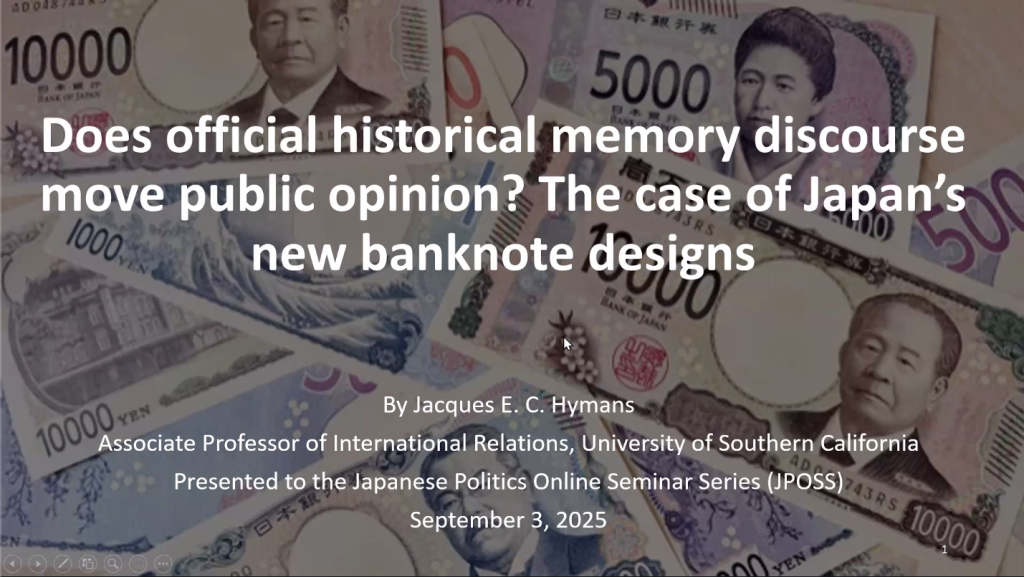
JPOSS #56: “Official Historical Memory Discourse and Public Opinion: The Case of Japan’s New Banknote Designs”

The fifty-sixth session of the Japanese Politics Online Seminar Series (JPOSS) took place on September 3, 2025. Phillip Y. Lipscy (University of Toronto) chaired the seminar and moderated the Q&A session.

Jacques Hymans (University of Southern California) presented his paper utilizing surveys to examine the effect of official discourse on individual views. His paper puzzles over how official and collective memory are often thought to be equivalent and sets out to understand the impact of official discourse on people’s views using surveys fielded before and after the release of new Japanese bank notes in July 2024. The results show increases in knowledge of the featured historical figures following circulation of the new notes, but no change in sense of appreciation toward the figures. Overall levels of appreciation revealed significant variation by factors such as sex, LDP support, and trust in the Bank of Japan, which suggests possible heterogeneity in dispositions toward official narratives.

Charles Crabtree (Dartmouth College) and Yoshikuni Ono (Waseda University) offered insightful comments on the explanatory variable, ways to model the relationship, and the reporting of survey design. During the Q&A, participants offered suggestions on relevant literature and alternative questions to explore.

The organizers would like to thank the presenters, discussants, and participants, as well as the staff at the Harvard Program on U.S.-Japan Relations, who provided administrative support. We look forward to seeing you at the next session of JPOSS: https://jposs.org/.
Categories
comparative politics international relations Japan-related research

JPOSS #54: “Extreme Wartime Violence and Attitudes toward the Use of Force: Evidence from Atomic Bomb Survivors”

The fifty-fourth session of the Japanese Politics Online Seminar Series (JPOSS) took place on May 29, 2025. Daniel M. Smith (University of Pennsylvania) chaired the seminar and moderated the Q&A session.

Sangyong Son (NYU) presented a paper which examines how the effects of exposure to extreme wartime violence and argues its effects on attitudes against the use and acquisition of instruments of war. In his study, the author examines the case of victims exposed to atomic bombings in Hiroshima and Nagasaki. Using judiciously and conscientiously sourced interview data from both Japanese and Korean survivors, along with a demographically comparable control group of interviewees, the author finds stronger and more enduring anti-militarist attitudes among victims directly exposed to nuclear attacks. In addition, the study further considers the robustness of the results by extending the analysis to victims of firebombing, another form of wartime violence. The additional test yields differing results, suggesting that extreme violence has distinct and possibly unique effects on attitudes toward militarism.

Christopher Blair (Princeton University) and Wilhelm Vosse (International Christian University) offered insightful comments to clarify the paper’s concepts and theories. They also suggested avenues to expand the study by exploring additional attitudinal outcomes and transmission of attitudes across generations. During the Q&A session, participants discussed alternative methodological framing, new sources of data on nuclear survivors, and further tests of the proposed theory.

The organizers would like to thank the presenters, discussants, and participants, as well as the staff at the Harvard Program on U.S.-Japan Relations, who provided administrative support. We look forward to seeing you at the next session of JPOSS:    https://jposs.org/.

Categories
comparative politics international relations Japan-related research

JPOSS #53: “Legacies of Atomic Bombings on Foreign Policy Attitudes in Japan”

The fifty-third session of the Japanese Politics Online Seminar Series (JPOSS) took place on February 27, 2025. Saori Katada (University of Southern California) chaired the seminar and moderated the Q&A session.

Masanori Kikuchi (Washington University in St. Louis) presented a paper that examines the multi-generational effect of exposure to large-scale atrocities, specifically the atomic bombings of Hiroshima and Nagasaki, on attitudes toward war and foreign policy. Building on existing research that presents competing findings on the effect of large-scale violence on victims’ support for aggressive policies, Kikuchi utilizes the unique case of the catastrophic bombings and the strikingly dovish leanings of victims in Japan to study different channels of influence that may explain this outcome. He tests theories of familial and community pathways of transmission using a survey that compares current residents in Nagasaki, Hiroshima, and other regions in Japan. Kikuchi finds evidence for a correlation between community ties— current residents and public school attendants—and lower support for nuclear weapons possession as well as higher support for international cooperation.

James Dongjin Kim (University of Washington) and Atsushi Yamagishi (Hitotsubashi University) offered insightful suggestions on ways to sharpen the theory and possible biases in measurement. During the Q&A session, participants furthered discussions on sampling considerations, local boards of education, and alternative explanations for the causal pathway.

The organizers would like to thank the presenters, discussants, and participants, as well as the staff at the Harvard Program on U.S.-Japan Relations, who provided administrative support. We look forward to seeing you at the next session of JPOSS:    https://jposs.org/.
Categories
comparative politics international relations Japan-related research

JPOSS #50: “Legacies of Settler Mortality and Historical Memory in Settlers’ Home Regions”

The fiftieth session of the Japanese Politics Online Seminar Series (JPOSS) took place on May 9, 2024. Yusaku Horiuchi (Dartmouth College) chaired the seminar and moderated the Q&A session.

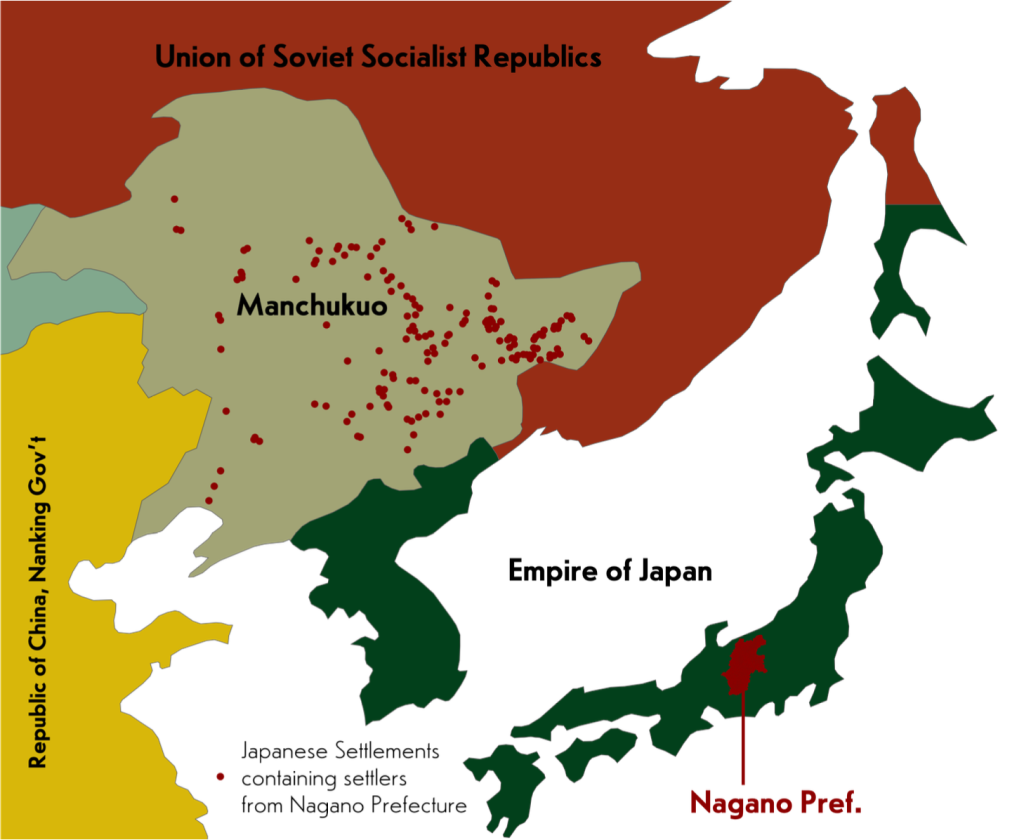
Harunobu Saijo (Hiroshima University) presented a pre-analysis plan co-authored with Jing Xu (Tsinghua University) in preparation for their survey implementation in the upcoming months. The authors examine the role of collective memory and historical prejudice in shaping outgroup prejudice, with a focus on a possible mitigating mechanism. They theorize that narratives making explicit the duality of ingroup members as both victims and perpetrators can potentially reduce outgroup hostility. In order to test different components of their theory, the authors make use of two separate analyses on newly collected data on emigrants from the Nagano prefecture to Manchukuo in the 1930s and 1940s. First, they exploit the natural variation in death rates of emigrants to examine the effects of collective victimization on attitudes of ingroup members who are exposed to the balanced framing narrative implemented in the prefecture’s educational program today. Second, they design a factorial vignette treatment to isolate the effects of the balanced framing narrative.

Volha Charnysh (Massachusetts Institute of Technology) and Anil Menon (University of California, Merced) offered insightful comments on the theory, pitfalls of the empirical design, and possible ways to strengthen the analysis. During the Q&A session, participants furthered discussions on ways to improve the paper and its proposed analysis, tips on the survey implementation, and ideas for further consideration.

The organizers would like to thank the presenters, discussants, and participants, as well as the staff at the Harvard Program on U.S.-Japan Relations, who provided administrative support. We look forward to seeing you at the next session of JPOSS:    https://jposs.org/.
Categories
international relations Japan-related research

JPOSS #49:“Japan and the African Development Bank”

The forty-ninth session of the Japanese Politics Online Seminar Series (JPOSS) took place on May 9, 2024. Christina Davis (Harvard University) chaired the seminar and moderated the Q&A session.

Tetsekela Anyiam-Osigwe (Princeton University) presented a paper co-authored with James Vreeland (Princeton University), which examines the influence of Japan vis-à-vis the United States on African states through the African Development Bank (AfDB). Using panel data on AfDB loans to each state between 1995 and 2015, the authors test the relationship between bilateral political interests and the size of AfDB loans using three measures, UN voting alignment, bilateral aid, and bilateral trade. Their two-way fixed effects model yields statistically significant positive relationships on all three measures for Japan but not the United States. Additional interviews with executives at the AfDB point to Japan’s dominance of co-financing arrangements between the Japan International Cooperation Agency (JICA) and the AfDB. Their findings suggests that Japan may be shaping loan distributions at the AfDB through these channels.

Yusaku Horiuchi (Dartmouth College) and Christopher Kilby (Villanova University) offered insightful comments on alternative explanations and suggestions on model specifications. During the Q&A session, participants furthered discussions on the theory and alternative empirical strategies.

The organizers would like to thank the presenters, discussants, and participants, as well as the staff at the Harvard Program on U.S.-Japan Relations, who provided administrative support. We look forward to seeing you at the next session of JPOSS:    https://jposs.org/.

Categories
comparative politics international relations Japan-related research

JPOSS #47: “Legacies of Wartime Sexual Violence: Evidence from World War II ‘Comfort Stations’”

The forty-seventh session of the Japanese Politics Online Seminar Series (JPOSS) took place on April 11, 2024. Daniel M. Smith (University of Pennsylvania) chaired the seminar and moderated the Q&A session.

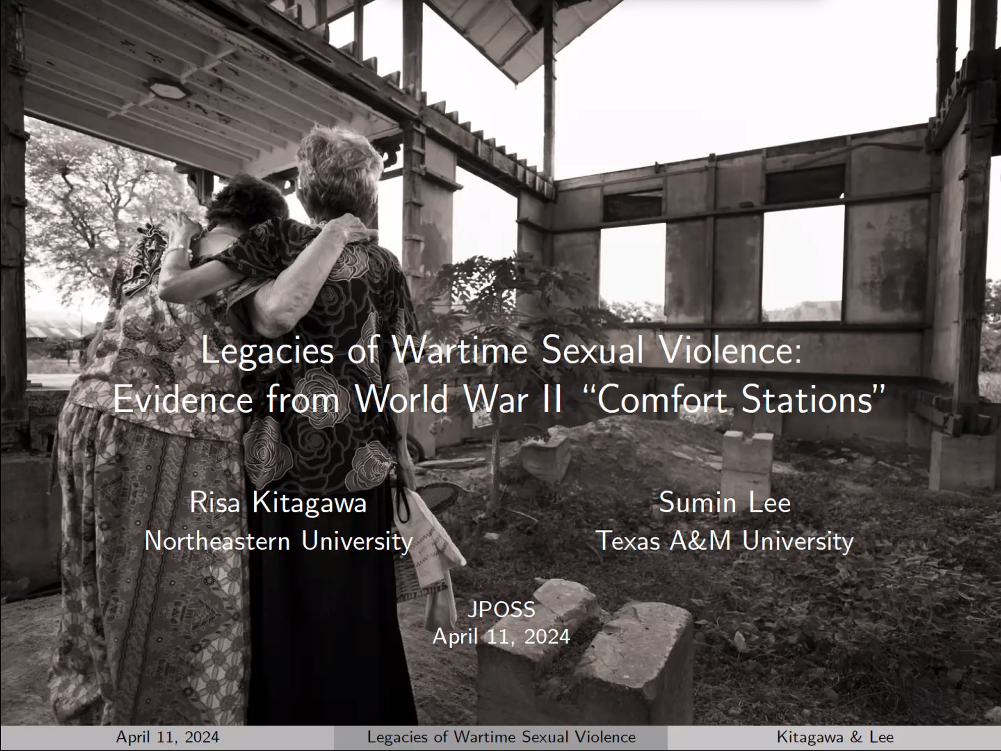
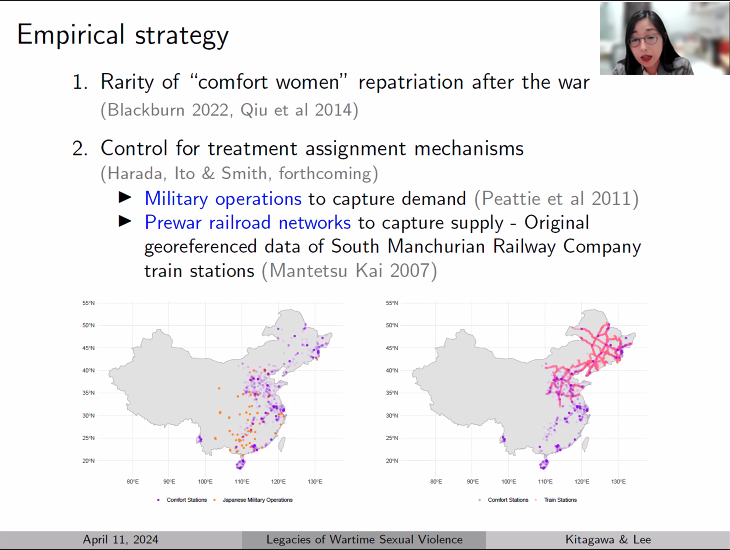
Risa Kitagawa (Northeastern University) presented a paper co-authored with Sumin Lee (Texas A&M University), investigating the long-term effects of wartime sexual violence on local communities, specifically levels of social and political trust. The effects are examined using original data on the locations of “comfort stations” instituted by the Japanese Imperial Army during World War II and the attitudes of individuals reported in recent surveys based on their proximity to these locations. The causal relationship is advanced by exploiting the orthogonal relationship between “comfort stations” and pre-existing levels of trust in communities, as well as controlling for the extent of military operations and violence against civilians. The authors conduct two individual-level analyses using a cross-national sample and a China national sample from two separate surveys. They find positive effects of “comfort stations” on trust in the family and negative effects on trust in the government. Lastly, they supplement their analysis with victims’ oral accounts, which present possible narratives behind the findings.

Eun A Jo (Cornell University and University of Notre Dame) and Daniel M. Smith (University of Pennsylvania) offered insightful comments on the theory, alternative explanations, and further considerations related to cross-national and over-time disparities. During the Q&A session, participants furthered discussions on conflicting explanations, ways to improve the statistical analysis, and alternative sources of data.

The organizers would like to thank the presenters, discussants, and participants, as well as the staff at the Harvard Program on U.S.-Japan Relations, who provided administrative support. We look forward to seeing you at the next session of JPOSS:   https://jposs.org/.
Categories
international relations

JPOSS #46: “Friend-Shoring without Decoupling: How Japanese Multinational Corporations Adapt to Political Risk in China”

The forty-sixth session of the Japanese Politics Online Seminar Series (JPOSS) took place on March 28, 2024. Phillip Y. Lipscy (University of Toronto) chaired the seminar and moderated the Q&A session.

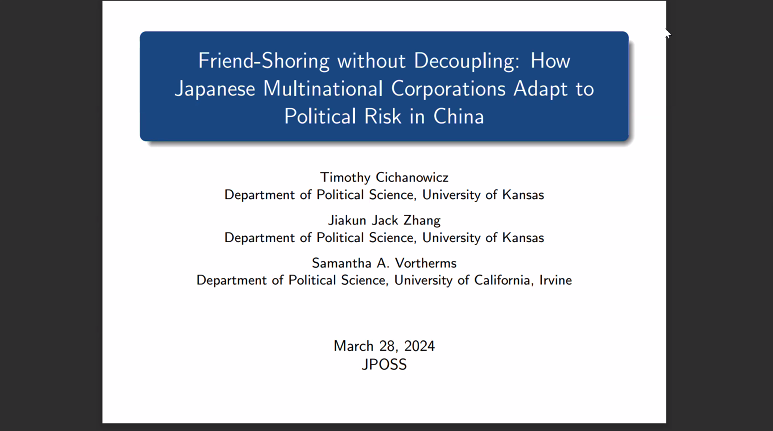
Timothy Cichanowicz (University of Kansas) presented a paper, co-authored with Samantha A. Vortherms (University of California, Irvine) and Jiakun Jack Zhang (University of Kansas), focusing on firm behavior in response to political risk in China. The authors exploit longer periods of data on behavior by Japanese firms—early movers in response to disputes between China and Japan—to test their theories on shifts in investment from China to other countries in general (“de-risking”) as well as to countries with security ties to Japan (“friend-shoring”). Based on their analysis, the authors argue for the presence of friend-shoring but lack of evidence for de-risking.

Lee Branstetter (Carnegie Mellon University) and Kristin Vekasi (University of Maine) offered insightful comments and suggestions on conceptual clarity, empirical measures, and considerations regarding context, among others. During the Q&A session, participants furthered the discussion on alternative empirical strategies and ways to overcome data availability constraints.

The organizers would like to thank the presenters, discussants, and participants, as well as the staff at the Harvard Program on U.S.-Japan Relations, who provided administrative support. We look forward to seeing you at the next session of JPOSS:   https://jposs.org/.

Categories
international relations Japan-related research

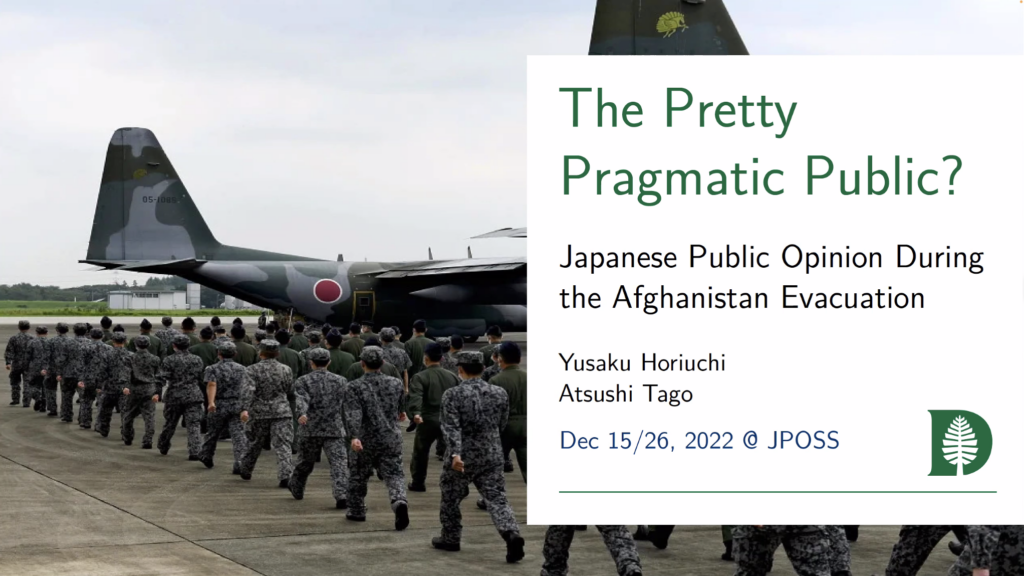
JPOSS #34: “The Pretty Pragmatic Public: Japanese Public Opinion During the Afghanistan Evacuation”

The thirty-fourth session of the Japanese Politics Online Seminar Series (JPOSS) took place on December 15, 2022. Amy Catalinac (New York University) chaired the seminar and moderated the Q&A session.

Yusaku Horiuchi (Dartmouth College) presented a paper co-authored with Atsushi Tago (Waseda University) on Japanese public opinion toward the Self-Defense Force’s (SDF) involvement in military operations in accordance with the US-Japan alliance. Their study offers an empirical expansion of the US-centric public opinion literature to the context of Japan, a crucial case in light of geopolitical developments in the region. Responding specifically to the literature on civilian control and casualty sensitivity, the authors administer an online survey experiment to understand the applicability of existing theories to Japan. In order to circumvent the shortcomings of utilizing hypothetical scenarios in survey experiments, the authors conducted a “real-time” survey experiment using the real and concurrent case of the SDF evacuation mission in Afghanistan as the situation was unfolding in August 2021. Consistent with studies on US public opinion, the authors find that first, Japanese support for military operations decreases in response to the presence of casualties, and second, the survey results do not align with the expectations of civilian control. However, unlike the case of the US, casualty sensitivity in the Japanese case does not seem conditional on the success of military operations. The survey experiments covered in this paper are part of a larger series of survey experiments conducted by the authors to understand Japanese public opinion toward military operations, an area of research that has until recently been limited.

Shoko Kohama (Hokkaido University) and Jonathan Renshon (University of Wisconsin-Madison) offered insightful comments on the scope conditions, potential downsides to employing “real-time” survey vignettes, and alternative ways to frame the study. During the Q&A session, participants furthered discussion on the framing and theoretical contributions of the study.

This event attracted around 32 participants and produced an engaging Q&A session. The organizers would like to thank the presenters, discussants, and participants, as well as the staff at the Harvard Program on U.S.-Japan Relations, who provided administrative support. We look forward to seeing you at the next session of JPOSS: https://jposs.org/